





In furniture, as in many other industries, the launch of a new product attracts everyone's attention. New design. New photos. New campaign. New product page. It is the visible, stimulating, almost spectacular part of a brand's work.
But the success of a piece of furniture is not determined solely on the day it launches. It is often built much more slowly, through listening to customers, improving content, refining logistics, quality control, and gaining a better understanding of the product. At SENHO, our MONTANA loft bed taught us this particularly well.
MONTANA: a good product that did not sell immediately
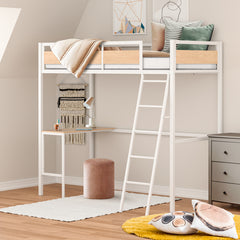
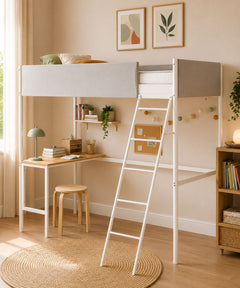
Several years ago, we launched the MONTANA 140 x 190 cm loft bed with a reversible staircase. We thought we had developed a product that met an obvious need: providing a genuine double bed elevated off the ground while freeing up a large amount of floor space.
But the first few weeks were disappointing. The product sold poorly in the first month. Then poorly again in the second.
Faced with this type of situation, a brand may be tempted to make a quick decision: discontinue the product, reduce its price sharply, or immediately launch something else. We chose a fourth option: to understand why.
Before changing the product, understand the problem
The feedback gradually revealed something interesting. Customers appreciated MONTANA's design. The problem was therefore not necessarily the bed itself. Rather, there was a gap between what the product could do and what visitors understood when looking at its product page.
Many customers had particular difficulty imagining a 140 x 190 cm loft bed in a relatively small bedroom. More importantly, some did not immediately realize that the staircase was reversible. It could be installed on either side of the bed, making it much easier to adapt the loft bed to the layout of the room.
To us, this feature was obvious. For a customer discovering the product on their screen in a few seconds, it was not. And this difference is fundamental in e-commerce.
A good product that is poorly explained can become a bad product in the customer's eyes
When a piece of furniture is displayed in a store, customers can walk around it. They can open a drawer. Examine the materials. Ask a salesperson a question. Assess its proportions. Online, everything has to be understood through photos, a video, dimensions, and a few paragraphs. A feature that is invisible on the product page practically does not exist for the customer.
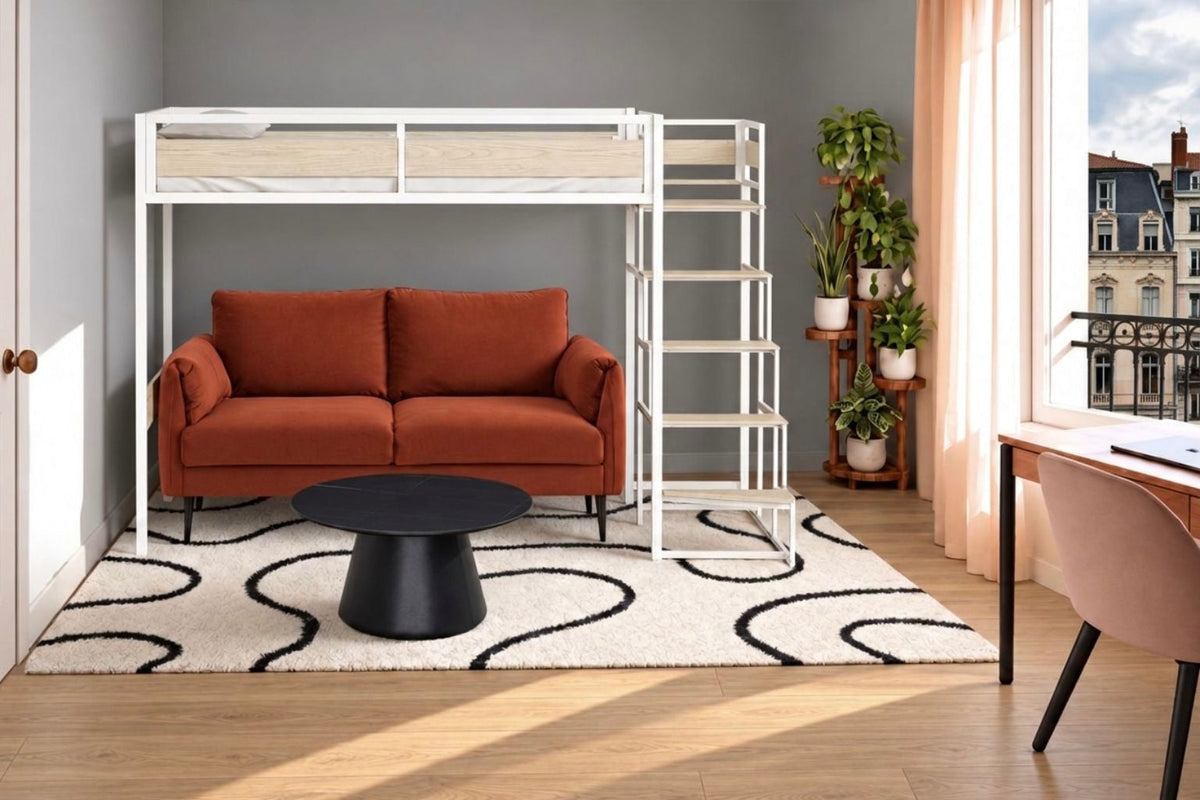
We therefore reworked the presentation of MONTANA. New photos made it easier to understand its proportions. A video clearly showed the two possible configurations of the reversible staircase. The information about the dimensions and the space needed around the bed was improved. We sought to answer more clearly the question the customer was actually asking: “Can this bed work in my bedroom?”
About a year later, MONTANA had become one of our best-selling products, and it is still one of the key items in the SENHO collection. The product itself had not fundamentally changed. Our way of explaining it had.
Launching a product is easy. Making it successful requires consistency.
This experience sums up a reality that is rarely highlighted when people talk about furniture creation or brand development. The launch is the enjoyable part. The real work begins afterward.
You have to learn how to present the furniture properly. Observe the questions customers ask again and again. Understand why certain features are not perceived. Improve the photographs. Clarify the dimensions. Modify the instructions. Strengthen the packaging. Train customer service. Identify logistical problems. Correct manufacturing details. Then start again.
This work is much less spectacular than a launch. But it is probably much more important.
In e-commerce, the product does not end with the furniture
At SENHO, we gradually came to consider that a product sold online consists of much more than the object that leaves the factory. A bed is not just a bed. The complete product also includes: its design; its materials; its manufacturing quality; its packaging; its photos; its product page; its clearly explained dimensions; its assembly instructions; its transport; its delivery tracking; and the quality of the service provided when a problem arises.
If any of these elements performs poorly, the overall experience deteriorates. An excellent piece of furniture with incomprehensible instructions is still a poor experience. A beautiful sofa that is insufficiently protected during transport is still a poor experience. A perfectly designed bed whose dimensions are poorly explained may simply never be purchased. The product experience therefore begins before purchase and continues until after assembly.
Why we do not want to operate like fast fashion
The furniture market is also subject to constant acceleration. New collections. New trends. New colors. New products. It can be tempting to believe that when a product sells less for a few weeks, the solution is automatically to replace it.
That is not our philosophy. SENHO is not intended to operate like a fast-fashion brand applied to furniture. A piece of furniture occupies an important place in a home. It uses raw materials. It must be manufactured, packaged, transported, and sometimes shipped more than a thousand kilometers. It is meant to remain with its owner for several years.
In this context, constant renewal is not necessarily synonymous with progress. Sometimes, the better question is not: "What new product should we launch?" but rather: "Why has this good product not yet found its audience?"
Improving an existing product rather than abandoning it too quickly
A month of weak sales can have many causes. The price may be poorly positioned. The photos may fail to highlight the right features. The description may answer questions no one is asking while overlooking those that are actually preventing the purchase. The dimensions may lack clarity. The product may appear in the wrong categories. Customers may not understand its main advantage.
Before discontinuing a product, we should therefore try to distinguish between a bad product and a poorly explained product. MONTANA clearly belonged to the second category. Its reversible staircase was a real advantage for small bedrooms. But as long as that advantage remained insufficiently visible, it had practically no commercial value.
Customers are often the best at revealing problems
Customer feedback is not always pleasant to read. Yet it is extremely valuable. A question asked twenty times usually indicates that important information is missing somewhere. A part that is regularly assembled incorrectly may indicate that the instructions need to be improved. A damaged corner after several shipments may reveal a packaging problem. Frequent confusion about the dimensions may signal that a technical drawing would be more useful than another paragraph.
The challenge is therefore not simply to respond to each customer individually. Problems experienced by individual customers must be transformed into collective improvements to the product and its experience. If ten people ask the same question, ideally the eleventh should no longer need to ask it.
Packaging is part of continuous improvement
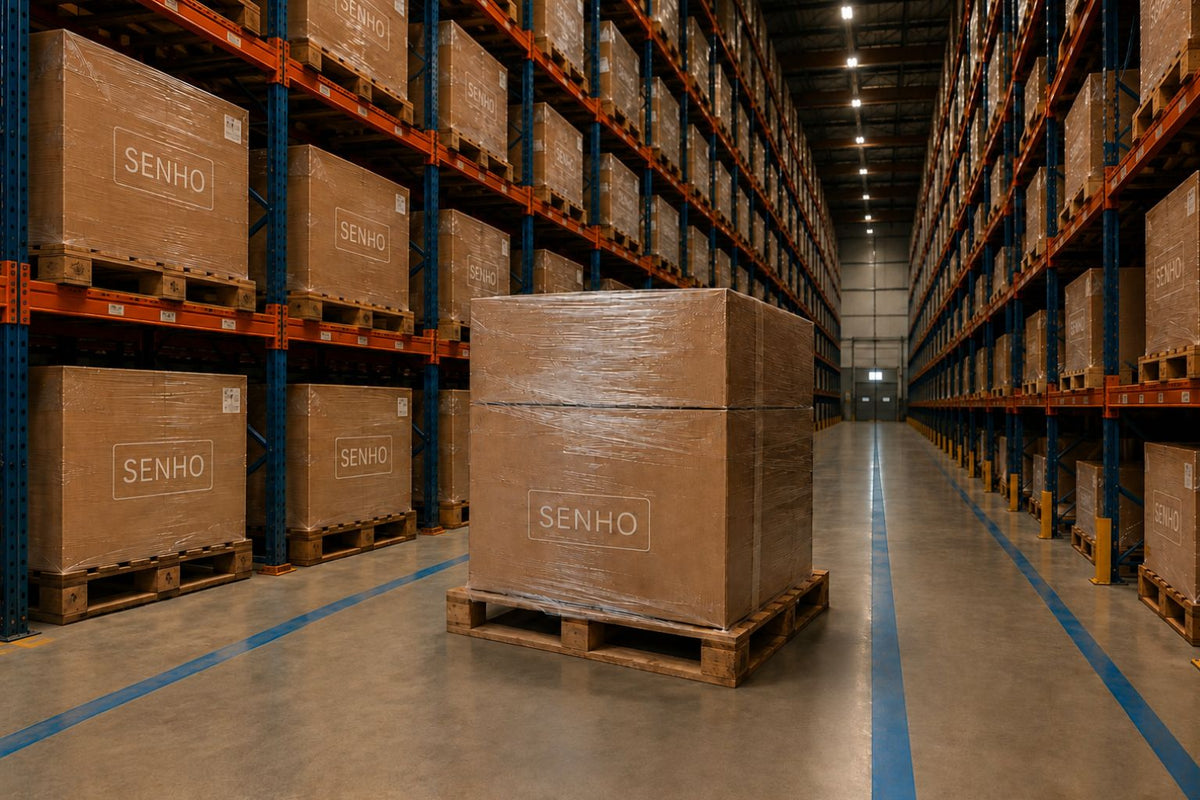
This philosophy is particularly important for furniture sold online. A piece of furniture can be perfectly manufactured and still arrive damaged if its packaging is not suited to the demands of transport.
This requires ongoing work. Observe the damage. Identify fragile areas. Add protection. Change the arrangement of the parts in the box. Reinforce certain corners. Test again.
The goal is not simply to manufacture the product correctly. It is to ensure that it arrives at the customer's home correctly. The best quality control in the world is useless if the final step destroys what was manufactured correctly.
The assembly manual is also a product
Another often underestimated element is the manual. For the manufacturer, assembly may sometimes seem obvious. The teams know the product. They know how to recognize the parts. They know the logical order of assembly. The customer, on the other hand, is discovering everything for the first time with several boxes open in front of them.
A good manual must therefore achieve something difficult: transform the experience of those who know the furniture perfectly into instructions that are understandable to someone who has never seen it. This is a process of continuous improvement, exactly like photography or packaging.
Consistency also builds a brand
There is another benefit to this approach. By constantly launching new ideas without finishing the previous ones, a brand risks becoming a catalog of products without a true common thread. Fifty half-developed ideas do not necessarily create a strong brand.
Consistency, on the contrary, comes from repeating certain principles: an expected level of quality; a way of presenting products; a standard of service; a design approach; practical solutions; attention to detail. By applying the same standards again and again, the different products begin to tell the same story. And it is this consistent story that customers eventually come to identify as a brand.
Innovation and consistency are not opposites
This obviously does not mean that innovation should stop. Innovation remains essential. New uses emerge. Homes evolve. Technologies change. Materials improve. So do consumer expectations.
But innovation should strengthen a collection, not simply create noise around it. A new product deserves to exist when it brings something genuinely new: a better function; a new level of comfort; a solution to a problem that had previously been poorly resolved; a technical improvement; or a new way to use space. Launching simply to have something new to announce isn't a product strategy.
Building furniture to last also means giving it time
This philosophy naturally aligns with the way we think about furniture. When we develop a piece of furniture, our goal isn't for it to be relevant for a few months. Whenever possible, we seek products capable of lasting, both in their construction and in their style.
It would therefore be contradictory to design furniture to last for several years and then abandon its marketing after a few weeks because it hasn't immediately found its audience. Some products need time: time to understand their positioning, time to improve their presentation, time to perfect their logistics, time to gather feedback, and sometimes simply time to become known.
What MONTANA taught us
MONTANA taught us something very simple. A product can be right before the way it is sold is.
We could have stopped it. We could have put it on sale. We could have launched a new loft bed and moved on to something else. Instead, we tried to understand. Then to improve. Clearer photos. A video showing the staircase in both positions. Better-explained dimensions. A clearer presentation. And gradually, the product found its market.
Sometimes, moving forward means improving what already deserves to last
Building a brand isn't just about adding launches together. It's also about deciding which ideas deserve time. At SENHO, we want to continue developing new furniture and new solutions. But we also want to devote energy to products that already exist: making them clearer, more reliable, easier to assemble, better protected, better explained, simpler to buy and receive.
Because sustainable brand growth doesn't necessarily come from an ever-expanding catalog. Sometimes, it comes from a more cohesive collection, made up of products that we improve for long enough to become genuinely good.
Sometimes, the best way to move forward isn't to launch more. It's to improve what already deserves to last.

Leave a comment
This site is protected by hCaptcha and the hCaptcha Privacy Policy and Terms of Service apply.